Monday, December 3, 2018

Music Monday (65): Lindsey Stirling

   Rules:
  • Music Monday is a weekly meme hosted by Lauren Stoolfire at Always Me that asks you to share one or two songs that you've recently enjoyed. For the rules, visit the page HERE 
Breana: It’s officially December, which means I have a legitimate excuse to talk about holiday music for the next couple of weeks. So my pick for today is Silent Night by Lindsey Stirling. I’ve listened to many versions of this song and Stirling’s is one of my favorites....


What are you listening to this week?
 

Monday, November 26, 2018

ARC Review: The Mortal Word by Genevieve Cogman

39169409Title: The Mortal Word
Series: The Invisible Library #5
Author: Genevieve Cogman
Source/Format: First to Read; eARC
More Details: Fantasy; Historical
Publisher/Publication Date: Ace; November 27, 2018

Goodreads     Amazon     Barnes & Noble     Book Depository

Synopsis from Goodreads...

In the latest novel in Genevieve Cogman's historical fantasy series, the fate of worlds lies in the balance. When a dragon is murdered at a peace conference, time-travelling Librarian spy Irene must solve the case to keep the balance between order, chaos . . . and the Library. When Irene returns to London after a relatively straightforward book theft in Vienna, Bradamant informs her that there is a top secret dragon-Fae peace conference in progress that the Library is mediating, but that the second-in-command dragon has been stabbed to death. Tasked with solving the case, Vale and Irene immediately go to 1890s Paris. Once they arrive, it seems that the murder victim had uncovered evidence suggesting that he may have found proof of treachery by one or more Librarians. But to ensure the peace of the conference, some Librarians are already hostages in the dragon and Fae courts. To save the captives, including her parents, Irene must get to the bottom of this murder—but was it dragon, Fae, or even a Librarian who committed the crime?
The Invisible Library is one of those series that keeps getting better and better. And while I’m guilty of not keeping up with this series as much as I should have—and I really need to—I had no problem reading The Mortal Word. This book was fantastic. The mystery kept me guessing and the action and danger made the story that much more exciting. There was a hefty dose of political intrigue and maneuvering as the Dragons, Fae, and Library all came together for a peace conference.

I have to say that I thoroughly enjoyed this story. Right from the start, it opens with Irene doing what she does best: retrieving books. But as it quickly became apparent, there was so much more going on this time around. There was a multitude of characters in a situation best described as volatile and high stakes. There were a lot of different sides to keep up with such as the Fae and their nature, some of the inner workings of the Dragon society, and how past animosity came into play while trying to make negotiations. So, there was never a boring moment. I also liked all the details about how the idea for the conference came about + all of the danger that came with it. As such, it was interesting to see how the opposing forces affected the setting—an alternative version of Paris—where the story took place.

The overall plot was fantastic, because, I’m going to be honest, there were a lot of characters with dubious motivations who did a number of questionable actions. It’s one of the things that made the mystery at the core of The Mortal Word as interesting as it was, which was why the buildup to the twists were all that more rewarding by the time the book was over. The ending was a satisfying conclusion to The Mortal Word while also leaving room for the story to continue.

The characters from this series have always been interesting, and there were a lot of familiar faces that appeared in The Mortal Word. Irene is, of course, my favorite character. I like her personality. Her job is pretty cool at times. And I also liked how she handled herself during some of the tensest moments of The Mortal Word. There was also Kai, and while he was present, his role was a little more in the background this time. Although, I enjoyed the moments where Kai and Irene got to interact.

All in all, The Mortal Word is one of the best books I’ve read so far this year. It’s effectively renewed my interest in The Invisible Library series. And after that ending, I hope there’s going to be another book after this one. If you’re a fan of this series, then The Mortal Word should be on your TBR list....

About the author...

Genevieve Cogman is a freelance author, who has written for several role-playing game companies. Her work includes GURPS Vorkosigan and contributions to the In Nomine role-playing game line for Steve Jackson Games: contributions to Exalted 2nd Edition and other contributions to the Exalted and Orpheuslines for White Wolf Publishing: Hearts, Swords and Flowers: The Art of Shoujo for Magnum Opus: and contributions to the Dresden Files RPG for Evil Hat Productions. She currently works for the NHS in England in the HSCIC as a clinical classifications specialist. She has had eight books of her series about the multidimensional Library accepted by Tor Books; the first three books, The Invisible Library, The Masked City, The Burning Page, and The Lost Plot are now available: the fifth, The Mortal Word, will be available in November 2018...

Website     Twitter     Goodreads


Disclaimer: this copy of the book was provided by First to Read for this review, thank you!


Wednesday, November 21, 2018

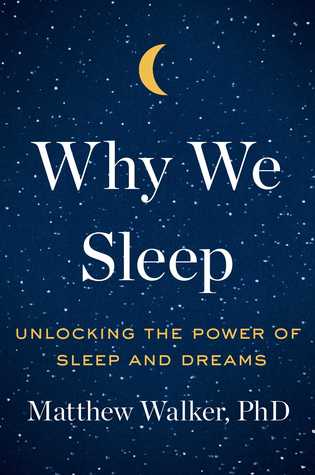
Review: Why We Sleep: Unlocking the Power of Sleep and Dreams by Matthew Walker

34466963Title: Why We Sleep
Series: n/a
Author: Matthew Walker
Source/Format: Borrowed from the library; paperback
More Details: Nonfiction; Science
Publisher/Publication Date: Scribner; October 3, 2017

Goodreads     Amazon     Barnes & Noble     Book Depository

Synopsis from Goodreads...

The first sleep book by a leading scientific expert—Professor Matthew Walker, Director of UC Berkeley’s Sleep and Neuroimaging Lab—reveals his groundbreaking exploration of sleep, explaining how we can harness its transformative power to change our lives for the better....

Sleep is one of the most important but least understood aspects of our life, wellness, and longevity. Until very recently, science had no answer to the question of why we sleep, or what good it served, or why we suffer such devastating health consequences when we don't sleep. Compared to the other basic drives in life—eating, drinking, and reproducing—the purpose of sleep remained elusive. An explosion of scientific discoveries in the last twenty years has shed new light on this fundamental aspect of our lives. Now, preeminent neuroscientist and sleep expert Matthew Walker gives us a new understanding of the vital importance of sleep and dreaming. Within the brain, sleep enriches our ability to learn, memorize, and make logical decisions. It recalibrates our emotions, restocks our immune system, fine-tunes our metabolism, and regulates our appetite. Dreaming mollifies painful memories and creates a virtual reality space in which the brain melds past and present knowledge to inspire creativity. Walker answers important questions about sleep: how do caffeine and alcohol affect sleep? What really happens during REM sleep? Why do our sleep patterns change across a lifetime? How do common sleep aids affect us and can they do long-term damage? Charting cutting-edge scientific breakthroughs, and synthesizing decades of research and clinical practice, Walker explains how we can harness sleep to improve learning, mood, and energy levels; regulate hormones; prevent cancer, Alzheimer’s, and diabetes; slow the effects of aging; increase longevity; enhance the education and lifespan of our children, and boost the efficiency, success, and productivity of our businesses. Clear-eyed, fascinating, and accessible, Why We Sleepis a crucial and illuminating book....
Why We Sleep is probably one of the most fascinating nonfiction books I’ve read this year. Organized in four sections—This Thing Called Sleep, Why Should You Sleep?, How and Why We Dream, and From Sleeping Pills to Society Transformed—Matthew Walker expertly writes about the science behind sleep and dreams.

Why We Sleep went into a number of topics. Things like the effects from the lack of quality NREM and REM sleep can have on the mind and body was talked about, as well as the benefits of sleep well with a healthy number of uninterrupted hours. Walker also went into the connection between sleep and memory. So, as a whole, I liked the majority of this book. It was highly informative.

While I was reading Why We Sleep, it was easy to see that Walker knew what he was talking about. Throughout the chapters, he goes in depth about studies that have been conducted over the years, and many of the ones he cited were those he was involved in during his career. That kind of first hand observation and knowledge about what it takes to study sleep—the high and low points experienced during the research process + revelations (aha moments) from unexpected sources—was part of what made the book so interesting.

One of my favorite sections of Why We Sleep was How and Why We Dream, which, as the name suggests, went in-depth about some of the science behind dreaming. And there were studies to back up the information provided. It was pretty cool to read about since I never considered those specific reasons for how dreams correlate with things experienced while awake.

Later down the road, I would like to read more about the subject of sleep. For now, I want to look into buying a copy of Why We Sleep since I only checked it out from the library. This is one book that I want to have on my shelf.

What about you? Have you read any books about sleep or dreaming? If you have, feel free to leave any recommendations down in the comment section below....

Monday, November 19, 2018

Music Monday (64): NateWantsToBattle

   Rules:
  • Music Monday is a weekly meme hosted by Lauren Stoolfire at Always Me that asks you to share one or two songs that you've recently enjoyed. For the rules, visit the page HERE 
Breana: Last week, I took an impromptu break from blogging. Now that I’m back, I wanted to participate in Music Monday, because one of the youtubers I follow did the opening theme for Beyblade Burst Turbo. And I took an unexpected trip down nostalgia lane. I haven’t kept up with Beyblade even though I used to watch the original series plus the seasons after it. I mean, I was a really big fan of the show to the point where I had one of the stadiums + some of the Beyblade sets. 
After a quick search, I discovered that I still have two of my old Beyblades; although, the white one is missing a piece. But, they’re pretty old now. And I was actually surprised that after all these years, the stickers on the orange one are still there and recognizable/readable so I can’t really complain. But that was years ago. However, the funny thing is I just happened to be following NateWantsToBattle when he did the announcement video revealing that he did the vocals for Turbo. I like this song and wish there was a full (longer) version of it to purchase....


What are you listening to this week?


Wednesday, November 7, 2018

Review: Putting the Science in Fiction edited by Dan Koboldt

38395588
Title: Putting the Science in Fiction
Series: n/a
Edited by: Dan Koboldt
Source/Format: Bookish First & Writer's Digest Books; Paperback
More Details: Nonfiction; Writing; Science
Publisher/Publication Date: Writer's Digest Books; October 16, 2018

Goodreads     Amazon     Barnes & Noble     Book Depository

Synopsis from Goodreads...

Science and technology have starring roles in a wide range of genres--science fiction, fantasy, thriller, mystery, and more. Unfortunately, many depictions of technical subjects in literature, film, and television are pure fiction. A basic understanding of biology, physics, engineering, and medicine will help you create more realistic stories that satisfy discerning readers. This book brings together scientists, physicians, engineers, and other experts to help you: Understand the basic principles of science, technology, and medicine that are frequently featured in fiction. Avoid common pitfalls and misconceptions to ensure technical accuracy. Write realistic and compelling scientific elements that will captivate readers. Brainstorm and develop new science- and technology-based story ideas. Whether writing about mutant monsters, rogue viruses, giant spaceships, or even murders and espionage, Putting the Science in Fiction will have something to help every writer craft better fiction.Putting the Science in Fiction collects articles from "Science in Sci-fi, Fact in Fantasy," Dan Koboldt's popular blog series for authors and fans of speculative fiction (dankoboldt.com/science-in-scifi). Each article discusses an element of sci-fi or fantasy with an expert in that field. Scientists, engineers, medical professionals, and others share their insights in order to debunk the myths, correct the misconceptions, and offer advice on getting the details right....

Since I first read the synopsis for Putting the Science in Fiction, I knew I needed to read it. I already like science based nonfiction like one of my recent reads, Why We Sleep by Matthew Walker, so this one was right up my alley. This book is comprised of a collection of advice written by experts in their given field. And I just have to say that it’s awesome to have so much information that can be a great help with developing technology and environments for science fiction, fantasy, or any type of story, all in one place.

Putting the Science in Fiction was a great book. Arranged in short chapters and separated into relevant sections—like Gnome Engineering: It Never Ends Well, and Things To Know For When Skynet Takes Over—it tackled a wide range of the common misconceptions about science across a number of subjects. There was everything from labs, genetics, medicine, biology, and even telescopes just to name a few. There was mention of zombies, Star Trek, and Star Wars among others. It also pointed out who got what right—or who got something as accurate as possible—with the information available at the time the book or movie was written or produced. Such as chapter 12—The Science of Jurassic Park by Mike Hays—where Hays discusses the “good science” of Jurassic Park as well as the creative liberties that Crichton took, i.e. “less hard science.” But it doesn’t stop there. There were so many useful facts to be found in Putting the Science in Fiction.

Overall all, I’m more than happy that I have a copy of this book to keep on my shelf. As such, I recommend it to just about everyone—writers, readers—anyone looking to have some of their questions about habitable atmospheres, nanotechnology, and space flight answered...


Disclaimer: this copy of the book was provided by Bookish First and Writer's Digest Books for this review, thank you!


Monday, November 5, 2018

Music Monday (63): H.E.R.

   Rules:
  • Music Monday is a weekly meme hosted by Lauren Stoolfire at Always Me that asks you to share one or two songs that you've recently enjoyed. For the rules, visit the page HERE 
Breana: This week, I'm listening to some recent music by H.E.R.. I listen to H.E.R. off and on and was glad to see some new music show up on my feed. And I have to admit that I like what I'm hearing. I'm now a total fan of the EP I Used To Know Her: Part 2, which was released on November 1, 2018. One of my favorite songs from the EP is Fate. Fate is a really beautiful song that I love...


My second pick this week is Carried Away by H.E.R.. It's from the same EP as Fate, and I love it just as much.... 


What are you listening to this week?


Friday, November 2, 2018

The Friday 56 (142) & Book Beginnings: Putting the Science in Fiction edited by Dan Koboldt

The Friday 56 is a weekly meme hosted by Freda's Voice where every Friday you pick a book and turn to page 56 or 56%, and select a sentence or a few, as long as it's not a spoiler. For the full rules, visit the the page HERE

Book Beginnings is a weekly meme hosted by Rose City Reader that asks you to share the first sentence (or so) of the book you're reading.


38395588Synopsis from Goodreads...

Science and technology have starring roles in a wide range of genres--science fiction, fantasy, thriller, mystery, and more. Unfortunately, many depictions of technical subjects in literature, film, and television are pure fiction. A basic understanding of biology, physics, engineering, and medicine will help you create more realistic stories that satisfy discerning readers. This book brings together scientists, physicians, engineers, and other experts to help you: Understand the basic principles of science, technology, and medicine that are frequently featured in fiction. Avoid common pitfalls and misconceptions to ensure technical accuracy. Write realistic and compelling scientific elements that will captivate readers. Brainstorm and develop new science- and technology-based story ideas. Whether writing about mutant monsters, rogue viruses, giant spaceships, or even murders and espionage, Putting the Science in Fiction will have something to help every writer craft better fiction.Putting the Science in Fiction collects articles from "Science in Sci-fi, Fact in Fantasy," Dan Koboldt's popular blog series for authors and fans of speculative fiction (dankoboldt.com/science-in-scifi). Each article discusses an element of sci-fi or fantasy with an expert in that field. Scientists, engineers, medical professionals, and others share their insights in order to debunk the myths, correct the misconceptions, and offer advice on getting the details right....


Beginning: "Stories require a delicate balance between too much and too little world building. Authors must always know more about their fictional setting than the reader, but the story needs only the information necessary to make the reader believe it is real."

56: "Jurassic Park pushed the limits of the fledgling molecular biology knowledge base in the late 1980s.


Comments: I received this book from Bookish First for review. I like this book a lot. My beginning comes from How to ask an Expert by Eric Primm, and my 56 is from The Science of Jurassic Park by Mike Hays on page 49. 

What are you reading this week?

Wednesday, October 31, 2018

The Spider Bride...

It’s finally October 31st. So, to start off this post I just have to say Happy Halloween! I actually planned ahead for once, and as such, had this post in mind as far back as the middle of September. And today, I’m finally going to talk about the second October related watercolor project I tackled: the Spider Bride. This is the other painting that I mentioned briefly on my Watercolor post for the witch redo. And I’m so excited to finally talk about this one. There’s no history behind this piece, and it came about kind of spontaneously.
The Process...
Around the time I was working on the witch painting, I did a quick sketch of another idea that I got out of the blue. I didn’t put too much effort into it, because at the time, I was just trying to parse out a general idea of it before I forgot. And ultimately, it didn’t fit with what I was trying to do with the Witch. So the idea landed on a different page, and that’s where it stayed until I decided that I also wanted to paint it. The Spider Bride is one of those sketches that happened to be good to go without too many alterations from the original version. Off to the side of the initial sketch, I played around with the option of doing a gothic cathedral inspired background. However, I ultimately abandoned that idea early on, because I didn’t like how it even appeared alongside the initial sketch for the Spider Bride.
When I mentioned on the Witch post that the color combinations for both paintings complimented each other, I honestly wasn’t kidding. I don’t know why, but I just didn’t go very dark with my color scheme. And the same thing applies for the Spider Bride. Once I started painting, my original warm/dark tones were tossed out the window in favor of the cooler tones I’m currently a fan of.

The final painting…


A couple of close ups...


The Witch and the Spider Bride side by side. From this view, it’s easier to see how the colors complement each other...


So, that’s about it for today. As for my next art related post, I’m planning to share some of the pages from my current sketchbook; although, I don’t know when that’ll appear on the blog—because I want to amass more pages so it’s not a post with one or two things. Anyway, I hope everyone has a great Halloween!


 Supply List...

Sakura Koi Watercolors
Prismacolor Premier Colored Pencils
Artist Loft Level 2 140lb watercolor paper
Gelly Roll white gel pen


Monday, October 29, 2018

Music Monday (62) Halloween Edition: Bobby (Boris) Pickett & Flyleaf

   Rules:
  • Music Monday is a weekly meme hosted by Lauren Stoolfire at Always Me that asks you to share one or two songs that you've recently enjoyed. For the rules, visit the page HERE 

Breana: It’s time for the Halloween edition of Music Monday! So my first pick for today is Monster Mash by Bobby (Boris) Pickett. It's a classic. And I had to mention it before October was over.…


My second pick is What’s This performed by Flyleaf for the Nightmare Revisited album. I’ll always love the original soundtrack for the Nightmare Before Christmas, but the Revisited side is pretty cool too. I love Flyleaf’s cover of What's This. Of course, the lyrics are the same, but the way the sound was rearranged to suit Flyleaf’s style is awesome….


What are you listening to this week?


Friday, October 26, 2018

The Friday 56 (141) & Book Beginnings: Why We Sleep by Matthew Walker

The Friday 56 is a weekly meme hosted by Freda's Voice where every Friday you pick a book and turn to page 56 or 56%, and select a sentence or a few, as long as it's not a spoiler. For the full rules, visit the the page HERE

Book Beginnings is a weekly meme hosted by Rose City Reader that asks you to share the first sentence (or so) of the book you're reading.


34466963Synopsis from Goodreads...

Sleep is one of the most important but least understood aspects of our life, wellness, and longevity. Until very recently, science had no answer to the question of why we sleep, or what good it served, or why we suffer such devastating health consequences when we don't sleep. Compared to the other basic drives in life—eating, drinking, and reproducing—the purpose of sleep remained elusive. An explosion of scientific discoveries in the last twenty years has shed new light on this fundamental aspect of our lives. Now, preeminent neuroscientist and sleep expert Matthew Walker gives us a new understanding of the vital importance of sleep and dreaming. Within the brain, sleep enriches our ability to learn, memorize, and make logical decisions. It recalibrates our emotions, restocks our immune system, fine-tunes our metabolism, and regulates our appetite. Dreaming mollifies painful memories and creates a virtual reality space in which the brain melds past and present knowledge to inspire creativity. Walker answers important questions about sleep: how do caffeine and alcohol affect sleep? What really happens during REM sleep? Why do our sleep patterns change across a lifetime? How do common sleep aids affect us and can they do long-term damage? Charting cutting-edge scientific breakthroughs, and synthesizing decades of research and clinical practice, Walker explains how we can harness sleep to improve learning, mood, and energy levels; regulate hormones; prevent cancer, Alzheimer’s, and diabetes; slow the effects of aging; increase longevity; enhance the education and lifespan of our children, and boost the efficiency, success, and productivity of our businesses. Clear-eyed, fascinating, and accessible, Why We Sleepis a crucial and illuminating book


Beginning: "Do you think you got enough sleep this past week? Can you recall the last time you woke up without an alarm clock feeling refreshed, not needing caffeine? If the answer to either of these questions is "no," you are not alone."

56: "When did life start sleeping?"


Comments: Why We Sleep is one of the books I recently checked out from the library. I'm not done reading it yet, but so far, it's a thoroughly fascinating look at some of the science behind, well, sleep. 

What are you reading this week?

Related Posts Plugin for WordPress, Blogger...